


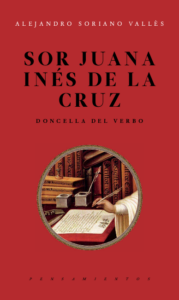
Entre Alfonso Méndez Plancarte (1909-1955), que publicara las Obras Completas (1951) de Sor Juana Inés de la Cruz y Alejandro Soriano Vallès (1960) se tiende un puente sólido de muy diversos estudios sobre la Décima Musa y su trascendencia en la época colonial de la historia de México. Durante estos 80 años se ha convertido en una especialidad literaria, histórica, cultural y teológica con diversas perspectivas en torno a esta figura tan importante en América. Este estudio de Sor Juana, de preeminencia historiográfica y espiritual es la más completa biografía de la Doncella del Verbo (2020) y consta de treinta y un capítulos, dos apéndices, más de mil notas, fuentes citadas y agradecimientos. Después de una primera versión aparecida bajo el sello de la editorial sonorense Garabatos, se presenta esta coedición, corregida y mejorada, con las últimas novedades en torno a la vida y obra de la que fuera niña de Nepantla. El autor gasta su tinta para hacerle frente a la ideología feminista y a los exégetas anticlericales para proponer, de manera reiterada, la tesis de que Juana Inés, antes que poeta, fue religiosa; antes que Musa Décima, Doncella del Verbo (326). Los conventos de mujeres afirma son “poderosos reactores espirituales” en la Nueva España; la ideología feminista no más no acierta a comprenderlos y frecuentemente distorsiona su sentido y su existencia. Si le quitamos al monacato femenino novohispano el contexto histórico, de un monasterio como el de San Jerónimo con más de ochenta religiosas, y desconocemos la realidad de que estos espacios de caridad y esperanza fueron, en buena medida, lugares para dar gloria a Dios, a través de la oración, la contemplación, el cuidado del culto divino y el bienestar a la sociedad, se pierde de vista la verdadera naturaleza de la obra de la Fénix de México. Sor Juana no sólo fue una mujer notable y reconocida, sino que también fue una mujer católica y perseverante en su camino espiritual. Si le quitamos lo sobrenatural al cristianismo, diría Chesterton, lo que queda es lo antinatural; y eso es lo que ha hecho gran parte de la crítica feminista.
La otra nota que se reitera incansablemente a lo largo de las 336 páginas de texto es la defensa a ultranza del clero novohispano. La exégesis anticlerical, la crítica jacobina iniciada por Octavio Paz, ha creído que los hombres del clero de su época le hicieron la vida imposible a esta monja “rebelde y subversiva”. Nada más alejado de la realidad histórica. El autor demuestra consistentemente que no había ninguna animadversión hacia ella, sino que los clérigos que la conocieron le amaron y celebraron su ingenio, virtud y anhelo de perfección espiritual. A decir del autor, ninguna novela histórica con el tema de Sor Juana, de los últimos veinte años le ha hecho justicia a la verdad documentada de esta “monjita que dedica sus días a orar, sacar cuentas, ayudar a los demás, estudiar y ocasionalmente escribir poesía” (461). Presentarla como rebelde, revolucionaria o incomprendida vende, pero no honra la verdad de su vida. Sólo hay dos fuentes primigenias para conocer a la Minerva Americana: La Respuesta a Sor Filotea, escrita por la propia Sor Juana y Fama y obras póstumas del Fénix de México, escrita por el jesuita Diego Calleja. “Además de estos documentos—dice Soriano—poseemos un puñado de títulos legales, cartas, manuscritos y diversos testimonios, obra de contemporáneos de la religiosa, obra de miembros de generaciones posteriores (en especial, los de aquellas de la primera mitad del siglo XVIII) que oyeron hablar de ella cuando aún estaba fresca su memoria” (31). De estas otras fuentes sabemos, por ejemplo, que Sor Juana supo que era hija natural, que en su vida seglar se la llamaba “doña Juana Inés de Asuage” (31) y que tuvo conexiones políticas y sociales importantes, gracias a su familia.
Poeta, desde la más tierna infancia, sin embargo, su más auténtica pasión “no fue escribir poesía, sino estudiar” (55). “Sabía con Aristóteles que Dios no creó arquetipos, sino seres, y acompaña a san Francisco en la certeza de que éstos eran, como hijos de un mismo Padre, sus hermanos” (188). Soriano Vallès, además está convencido de que “Sor Juana Inés de la Cruz. Doncella del Verbo, ascendió la vía que la llevó, por grados, del apego a la erudición al de la ciencia y, finalmente, al de la sabiduría. Prolegómeno y augurio de todo ello es su obra maestra: Primero Sueño” (168).
Fiel al oficio de historiógrafo, Soriano Vallès ha ido publicando diversos estudios rigurosos en que cita y reclama que se le reconozcan ciertos descubrimientos y gozosos hallazgos sobre las falsas polémicas desatadas en torno a su amada Sor Juana. Algo raro, sin embargo, sucede cuando la lectura en torno a las sutilezas se aprovecha como oportunidad para ostentar una militancia. Publica, como apéndices el Memorial y Licencia para llevar a cabo el orden del hábito de bendición, la Carta de Puebla y la Carta de San Miguel; documentos que muestran a Manuel Fernández de Santa Cruz, obispo de Puebla, aconsejando y exhortando a Sor Juana a ser teóloga y, por tanto, son falsas y no documentadas las aseveraciones acerca de que él y otras autoridades eclesiásticas, quisieron reprimir, disminuir o incluso prohibir el ejercicio intelectual y espiritual de la monja docta.
Soriano ha defendido en otras publicaciones que ella donó su biblioteca personal, no se la quitaron, como afirman afamados sorjuanistas. Reconoce a Jesús Joel Peña Espinosa, Joaquín Antonio Peñalosa y a Tarsicio Herrera Septién, entre otros, el esfuerzo porque se recupere el verdadero lugar que ocupó la Fénix Americana en el concierto novohispano. La Carta Atenagórica, leída con un ejercicio hermenéutico moderado representa la mejor muestra del respeto de quienes la trataron, la quisieron, la admiraron, la guiaron, la aconsejaron, la dieron a conocer y la acompañaron todo el tiempo que la conocieron.
El lector se puede sentir desorientado o, incluso, abrumado por la nutrida información de este texto, si cae en la tentación, como yo lo hice, de leer, al mismo tiempo las notas que se mandaron al final (más de mil) y, va y viene en cada renglón que avanza. Lo mejor, quizás, será leer el texto de corrido y dejarse guiar por la intencionalidad espiritual del autor que, sin duda, ama fraternalmente (como lo hiciera Alfonso Méndez Plancarte) a esta Doncella del Verbo. Después, al revisar las notas uno podrá darse cuenta de la profusa investigación hecha para hacer todas aquellas aseveraciones. Uno aprende cómo es que la historia no es caprichosa, sino sutil. Las aclaraciones, los detalles y gratas sorpresas en esas sutilezas son revelaciones para alcanzar una mejor comprensión del mundo y la experiencia de vida de Sor Juana. A veces puede llegar a ser farragosa la labor, pero la paciencia todo lo alcanza. He disfrutado leyendo como el autor va precisando y aclarando la verdad sobre lo que realmente ocurrió. Es innecesario, en mi humilde opinión, querer poner en su lugar a “los radicales y criptohermeneutas” que han desfigurado la memoria de Sor Juana, gloria de la Nueva España y, de paso, a la Nueva España; el academicismo hace repetitivo y farragoso el repaso biográfico. Si en lugar de alejar, se acercara al estudio de la vida y obra de una figura tan significativa para la historia de México tendría que omitir las querellas. Personalmente, creo que este nuevo y completo acercamiento a la vida y la obra de Sor Juana, nos permite valorar la compasión del personaje, nacida de una bella y verdadera espiritualidad cristiana. Invito a que se escriba, para los niños y jóvenes de México, una versión breve que acerque, inspire, y hable de esta espiritualidad vital de Sor Juana Inés de la Cruz.
Nota Editorial: Esta reseña publicada originalmente en el Número 17 de la revista digital Conspiratio (2024) https://www.conspiratio.mx/numero-17/la-doncella-del-verbo , expresa cómo Sor Juana Inés de la Cruz se ha convertido en una especialidad literaria, histórica, cultural y teológica con diversas perspectivas.
————————————————————-
[English]Between Alfonso Méndez Plancarte (1909–1955), who published the Obras Completas (1951) of Sor Juana Inés de la Cruz, and Alejandro Soriano Vallès (1960), a solid bridge of very diverse studies on the Tenth Muse and her significance in the colonial period of Mexican history has been built. Over these eighty years, the field has become a literary, historical, cultural, and theological specialization, with diverse perspectives on this figure of such importance in the Americas. This study of Sor Juana—one of historiographic and spiritual preeminence—is the most complete biography of the Maiden of the Word (2020) and consists of thirty-one chapters, two appendices, more than one thousand end notes, cited sources, and acknowledgments.
Following a first version published under the Sonoran imprint Garabatos, this co-edition—corrected and updated, with the latest findings on the life and work of the girl from Nepantla—is now presented. The author spends his ink confronting feminist ideology and anticlerical exegetes in order to advance, repeatedly, the thesis that Juana Inés was, before being a poet, a religious woman; before being the Tenth Muse, the Maiden of the Word (326). Women’s convents, he affirms, were “powerful spiritual reactors” in New Spain; feminist ideology simply cannot understand them and frequently distorts their meaning and existence. If we strip New Spain’s female monasticism of its historical context—a monastery like San Jerónimo’s with more than eighty nuns—and ignore the reality that these spaces of charity and hope were, to a great extent, places for giving glory to God through prayer, contemplation, the care of divine worship, and service to society, we lose sight of the true nature of the work of the Phoenix of Mexico. Sor Juana was not only a remarkable and recognized woman, but also a Catholic woman, persevering in her spiritual path. If we strip the supernatural from Christianity, Chesterton would say, what remains is the unnatural; and that is precisely what much of the feminist criticism has done.
The other note sounded tirelessly throughout the 336 pages of text is the uncompromising defense of the New Spain’s clergy. The anticlerical exegesis, the Jacobin criticism initiated by Octavio Paz, has held that the clergymen of her era made life impossible for this “rebellious and subversive” nun. Nothing could be further from the historical reality. The author consistently demonstrates that there was no animosity toward her whatsoever; rather, the clerics who knew her loved her and celebrated her genius, virtue, and yearning for spiritual perfection. According to the author, no historical novel on the theme of Sor Juana published in the last twenty years has done justice to the documented truth of this “little nun who devoted her days to praying, keeping accounts, helping others, studying, and occasionally writing poetry” (461). Presenting her as rebellious, revolutionary, or misunderstood, sells books, but it does not honor the truth of her life. There are only two primary sources for knowing the American Minerva: The Reply to Sister Philothea, written by Sor Juana herself, and Fama y obras póstumas del Fénix de México, written by the Jesuit Diego Calleja. “Beyond these documents,” says Soriano, “we possess a handful of legal titles, letters, manuscripts, and various testimonies—some from the nun’s contemporaries, others from members of later generations (especially those of the first half of the eighteenth century) who heard of her when her memory was still fresh” (31). From these other sources we know, for example, that Sor Juana was aware that she was an illegitimate daughter, that in her secular life she was called “doña Juana Inés de Asuage” (31), and that she had important political and social connections, thanks to her family.
A poet from the earliest childhood, her most authentic passion was nevertheless “not writing poetry, but studying” (55). “She knew with Aristotle that God did not create archetypes, but beings, and she shared with Saint Francis the certainty that these beings were, as children of the same Father, her brothers and sisters” (188). Soriano Vallès is furthermore convinced that Sor Juana Inés de la Cruz. Doncella del Verbo “ascended the path that led her, by degrees, from attachment to erudition to that of science and, finally, to that of wisdom. The prolegomenon and augury of all this is her masterwork: Primero Sueño” (168).
Faithful to the vocation of the historiographer, Soriano Vallès has been publishing various rigorous studies in which he cites and demands recognition for certain discoveries and joyful findings concerning the false controversies unleashed around his beloved Sor Juana. Something unusual, however, occurs when the reading of the subtleties is used as an opportunity to display a kind of militancy. He publishes, as appendices, the Memorial and License to carry out the order of the blessing of the habit, the Carta de Puebla, and the Carta de San Miguel—documents showing Manuel Fernández de Santa Cruz, Bishop of Puebla, counseling and exhorting Sor Juana to become a theologian and, therefore, demonstrating that the assertions claiming he and other ecclesiastical authorities wished to repress, diminish, or even prohibit the learned nun’s intellectual and spiritual activity are false and undocumented. Soriano has argued in other publications that she donated her personal library—it was not taken from her, as prominent Sorjuanistas assert. He acknowledges the efforts of Jesús Joel Peña Espinosa, Joaquín Antonio Peñalosa, and Tarsicio Herrera Septién, among others, to recover the true place occupied by the American Phoenix in the concert of New Spain. The Carta Atenagórica, read with a measured hermeneutic exercise, represents the finest example of the respect shown by those who dealt with her, loved her, admired her, guided her, counseled her, made her known, and accompanied her throughout the time they knew her.
The reader may feel disoriented—or even overwhelmed—by the dense information in this text, should they succumb to the temptation, as I did, of reading the notes (more than one thousand) sent to the end simultaneously, going back and forth with every line advanced. The best approach, perhaps, will be to read the text straight through and allow oneself to be guided by the author’s spiritual intentionality—which, without doubt, fraternally loves (as Alfonso Méndez Plancarte did) this Maiden of the Word. Afterward, upon reviewing the notes, one will appreciate the profuse research undertaken to support all those assertions. One learns how history is not capricious, but subtle. The clarifications, details, and pleasant surprises in those subtleties are revelations that lead to a better understanding of Sor Juana’s world and lived experience. The work can at times become laborious, but patience achieves all things. I have enjoyed reading how the author progressively clarifies and establishes the truth about what actually happened. It is unnecessary, in my humble opinion, to want to put in their place the “radicals and crypto-hermeneutists” who have disfigured the memory of Sor Juana, glory of New Spain—and, incidentally, of New Spain itself; the academicism makes the biographical survey repetitive and unwieldy. If, instead of pushing readers away, one were to draw them closer to the study of the life and work of a figure so significant to the history of Mexico, the quarrels would have to be omitted. Personally, I believe that this new and complete approach to the life and work of Sor Juana allows us to value the compassion of the figure, born of a beautiful and authentic Christian spirituality. I invite someone to write, for the children and young people of Mexico, a brief version that brings this vital spirituality of Sor Juana Inés de la Cruz closer to them, inspires them, and speaks to their hearts.
*Editorial Note: This review, originally published in Issue 17 of the digital journal Conspiratio (2024) https://www.conspiratio.mx/numero-17/la-doncella-del-verbo, examines how Sor Juana Inés de la Cruz has become a literary, historical, cultural, and theological specialty with diverse perspectives.
Investigador, Consultor y Mentor independiente