Journal for the Hispanic Theological Initiative

Perspectivas is the online peer-reviewed bilingual
subscription journal of the Hispanic Theological Initiative


| Spring 2017
Spring 2016
HTI 25th Anniversary
2024
2023
2022
2021
2020
2019
2018
Free Back Issues
HTI Articles
Free Back Issues
HTI Articles
 Abstract:
The author retrieves and claims the Christian identity as “followers or disciples of Jesus”, or as “wearing Jesus Christ,” as a countercultural and liberating socio-spiritual identity to be affirmed for the sake of becoming a life-giving and liberating church and theological school amidst identities,
Read More / Download Issuesystems, and relationships that “dress up people with identities” that produce death and oppressions in today’s world. With Evangelical and metaphorical language, she calls to “take off” the “clothes or identities of social systems that dress us with clothes-identities that are contrary to God’s ways, and to let God “to dress us up with Jesus Christ,” as Godself did in the incarnation. Theological education, at its best, challenges the dehumanizing clothes-identities of social systems and helps us to wear Christ or priestly clothes congruent with God’s reign and its “integral freedom – emotional, physical, social, economic, political, and religious.”
- Abstract:
The author retrieves and claims the Christian identity as “followers or disciples of Jesus”, or as “wearing Jesus Christ,” as a countercultural and liberating socio-spiritual identity to be affirmed for the sake of becoming a life-giving and liberating church and theological school amidst identities,
Read More / Download Issuesystems, and relationships that “dress up people with identities” that produce death and oppressions in today’s world. With Evangelical and metaphorical language, she calls to “take off” the “clothes or identities of social systems that dress us with clothes-identities that are contrary to God’s ways, and to let God “to dress us up with Jesus Christ”, as Godself did in the incarnation. Theological education, at its best, challenges the dehumanizing clothes-identities of social systems and helps us to wear Christ or priestly clothes congruent with God’s reign and its “integral freedom – emotional, physical, social, economic, political, and religious.”
 Abstract:
Acknowledging the twin crises facing the church and higher education, the author calls for courageous action in theological education. Using Jeremiah’s risky real-estate investment in a plot of land in Anatoth amid crisis, Vasquez-Levy sees the opportunity to leverage the legacy and
Read More / Download Issuecontext of the Pacific School of Religion to invest in those whose very marginality has sharpened their ability to innovate. Making the case that there is an extensive need for spiritually rooted leadership in the world, he reframes the financial and enrollment challenges of schools as being less about resources and more about access. He weaves voices from Scripture, history, academy, and culture to ask “Amid all the uncertainty God will continue to raise leaders that can bring about God’s dream and vision for the world. What role will we play? Where will we invest?”
 Abstract:
The author reflects on a long-standing experience of leadership service to the school for over 24 years and presents himself as a “dreamer” with a dream of Sacred Heart as a place “full of prestige that enjoys national and international fame for its superb theological, spiritual,
Read More / Download Issuepastoral, and human formation, and as a holy place, where the world meets to encounter and extend the reign of God.” The embodiment of this dream will require several efforts: first, the reaffirmation of its “SCJ charism and Dehonian spirituality” in its life and purpose”; second, the clarity to name the expected core ways of being and working of those graduates connected to the spiritual, intellectual, pastoral, and human formation aims; third, administrative practices that are collaborative and based on the principle of subsidiarity; fourth, the creation of new administrative structures and educational programs.
 Abstract:
Grounding his reflections on Meadville Lombard’s faith tradition and legacy, the author speaks to the distinctive contribution of the school in a time of uncertainty. He states that over the 175-year history of the school, “in times of challenge, [Meadville Lombard Theological School] has
Read More / Download Issueanchored its hope in future possibilities.” He calls on the community to rise to the challenges and seize the opportunities of this moment. He highlights the intentional connection between theory and practice that marks the school’s curriculum, which gives rise to the core leadership skills which “theological education contributes to our civic lives equipping religious communities, lay members, and religious leaders with a moral vision necessary to justice-making work in the world and lives of service in the public sphere.”
 Abstract:
Reflecting personally on his own vocation story, the author highlights the centrality of God’s invitation and our response to be part of the healing of the world. He connects individual vocation to the vocation of the seminary and the church by
Read More / Download Issueexploring the rich use of the phrase “let it be” or “let it be done”—Fiat in Latin—in the New Testament. The gathered community, and through them the broader church, are challenged to be willing, like Mary, to bear Christ to the world, to mirror Jesus’ willingness to embrace the grief of the world, and to pray each day as Jesus taught us, “thy will be done.” Acknowledging the particularly challenging moment marked by pandemic and crisis, a faithful vision emerges “not because we’re so impressive in our faithfulness but because we know God will always be faithful to us.”
 Abstract:
This pastoral reflection is about an interim president who, after serving for two years, is now inaugurated as acting president. He declares his identity and trajectory as a pastoral leader serving the church and the Seminary. He narrates the ways things have changed to address the
Read More / Download Issueinstitutional and financial crisis during the COVID era. The author reaffirms the history, role, and mission of the seminary as a school for and of the church for the formation of ministers and ministry committed to the liberating power of the Gospel, and as a forum for open dialogue and research. He calls for unity between the Seminary and the Church, and as well as between Christians of different orientations. He discusses the renewal of academic programs, educational technology, and the aspiration for a research center. Finally, the author expresses humbly his collaborative leadership style and requests support in fulfilling a call to become a president-pastor for the Seminary.
- Abstract:
This pastoral reflection is about an interim president who, after serving for two years, is now inaugurated as acting president. He declares his identity and trajectory as a pastoral leader serving the church and the Seminary. He narrates the ways things have changed to address the
Read More / Download Issueinstitutional and financial crisis during the COVID era. The author reaffirms the history, role, and mission of the seminary as a school for and of the church for the formation of ministers and ministry committed to the liberating power of the Gospel, and as a forum for open dialogue and research. He calls for unity between the Seminary and the Church, and as well as between Christians of different orientations. He discusses the renewal of academic programs, educational technology, and the aspiration for a research center. Finally, the author expresses humbly his collaborative leadership style and requests support in fulfilling a call to become a president-pastor for the Seminary.
 Abstract:
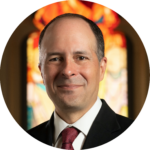
In this sermon, the author calls Duke Divinity School to be open and ready for a new Pentecost that is “pressing, possible, and promised.” Using the biblical texts of Babel and Pentecost, the author explores imaginatively a contrast between the world according to Babel and according
Read More / Download Issueto Pentecost. Ultimately, the author longs “for our academic and vocational formation to be known for cultivating a Pentecost vision of God, the church, and the world.” Can there be a new Pentecost at Duke Divinity School? It is possible if all in the school commit to affirming the Spirit’s winds for a) affirming the goodness of human diversities, b) connecting learning and scholarship to the lives and struggles of people in the many peripheries and margins in the world, and c) raising our students high as the “sails” where the Spirit blows during this age of COVID pandemic.
 Abstract:
The author engages with a rich set of parables and images to beautifully articulate the critical importance and responsibility of theological education. Recognizing the power of words to shape community and imagination, he calls on his colleagues and community to take seriously
Read More / Download Issuetheir “scribal” task of balancing the new and the old. He states that “the great temptation of theological education is to focus on one or the other: the old at the cost of the new, or the new at the cost of the old.” Challenging the community to move beyond the binary of nostalgia and novelty, he articulates the work of theological educators at a time of great disruption as being scribes of the kingdom who take the conjunction “and” seriously drawing on the wisdom of tradition and embracing the possibilities of change.
 Abstract:
This theological reflection centers around a confession and a call for “unrelenting hope” to claim and re-live in our times the “spiritual and institutional DNA” or identity that has
Read More / Download Issuecharacterized the seminary since its foundations, that is, its vocation to be and to serve at the margins. It is a vision and practice of ministry and theological education grounded in Jesus’ liberating and affirming ministry to marginal and poor people. “My unrelenting hope and vision for Garrett-Evangelical is that… we are a community unapologetically claimed and identified by the Spirit of Jesus… we will equip leaders to grow and thrive in spreading hope at the margins and wherever distorted versions of humanity and themselves grip people. Garrett is called to be both a mirror so that distortion can be exposed, and also the bearer of the gift of wholeness and flourishing that Jesus promised.”
 Abstract:
The author seeks to unite and help the Cornerstone community to focus on the historic opportunity for Cornerstone University and Cornerstone Theological Seminary to arise and become the destination of choice for Christian Higher Education. “And my vision, our vision for
Read More / Download Issuethis wonderful, great university called Cornerstone University, is to have a Cornerstone graduate in every household of America.” He delineates a vision and the qualities needed to achieve this goal and its impact. He calls the university and seminary to show “great moral courage proclaiming and defending… The faith of Jesus and the gospel;” “to be a beautiful community that mirrors the kingdom of God” in accepting diversity in hospitable ways; to be committed to “truth and not ideologies” and to practice holistic spiritual formation.
 Abstract:
The author calls the Austin Seminary to celebrate, re-examine its history, and lament what has perished without feeling defeated or abandoned. He beacons the question: “What is this place of learning and faith we call Austin Presbyterian Theological Seminary? He quotes
Read More / Download IssueMartin Heidegger, “We ought to be keenly aware of our (Dasein) “being there” of our place as prophetic voice amid unjust systems of exclusion and oppression. He uses the term immigrant imagination to exhort the community to ponder what it means to find a place of belonging in our world, especially when at times it is indifferent, self-preoccupied, and unhospitable. To be aware of this place, Austin Seminary, and to listen to the wisdom of the apostle in Ephesians, who invites us to be rooted and established in love so that we may be empowered to grasp another model of dimensionality, not measured solely in numbers, but on how wide and long and high and deep is the love of the one we seek to emulate in all forms of service. Calling the seminary to teach new generations of Christians and listening to the faith of Millennials, Gen Z’s, Gen Alphas, and those who will follow, in whatever form that faith is emerging should start to inform Austin’s curriculum now. He exhorts the seminary to plant seeds that will sustain people in the continuum of theological learning which begins before seminary education and continues after they leave the classroom. Making Austin a place of cultivation, a widening place seeking out special gifts for service within the church and helping them discern such passions that may signal a vocation for ministry.
 Abstract:
In this presidential address Rev. Dr. Aloyo calls Columbia Seminary to start a new day in abundance and grace and not scarcity and fear. He uses both Isaiah 55:1-9 and Revelations 22:1-5 to say that God’s affirmations of abundance and grace are pushing, in fact, demanding that Colombia re-engage
Read More / Download Issueboth locally and in communities abroad in new ways. Making Columbia an institution where all feel welcomed and included, where candid conversations and vigorous debates can be had. Harnessing the power of the institutional human and financial capital in collaboration with civic partners, foundations, government agencies, and corporations to create and learn new knowledge, invest collaboratively, and apply resources to critical needs. It requires an approach that spans multiple disciplines, a mindset that embraces collaboration, and, yes, the funding and philanthropic support necessary to succeed.
 Abstract:
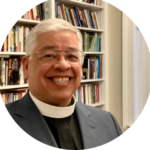
The author references two murals found in small town of Lavapiés in Spain, the first with the wording “Usted Está Aquí” (you are here) to bring attention to the current situation in theological education and the negative and discouraging narratives like declining enrollment and
Read More / Download Issuedecreasing interest in all types of organized religion. He is mindful that these are real and can’t be ignored, and he calls Drew University to reflect as Easter approaches how millions are still preparing in the season of Lent and how even the so-called Religions Nones are deeply committed to values like tolerance, and engaged in serving communities, work in social, economic, environmental justices to build vital healthy, stable, and caring societies. He points to research that shows that the vast majority of the world’s people will continue to identify with a religion. He then references the late Eduardo Galeano (1940-2015, an author, poet and journalist from Uruguay, and the mural art with the wording, “Somos lo que hacemos para cambiar lo que somos” (We are what we do in order to change what we are) as well as Micah chapter 6, and begs the question, “Now what?” Will Drew University revisit its mission and vision and be creative and take courageous action to advance justice, peace and love of God, neighbor, and the earth? He responds by saying, “Yes, we can do this because we have this within us collectively.”
 Abstract:
The historical realities of the reception history of violent texts place a particular burden on religious interpreters of violent biblical texts. In the past, religious interpreters of the book of Joshua justified mass murder of indigenous communities
Read More / Download Issuein the Americas. In this sense, the texts themselves are inherently dangerous in their canonical form—a problem that neither “plain-sense” readings nor historical critical approaches can address. I utilize Robert Warrior’s concept of reading violent passages through “Canaanite eyes” as a paradigm that aims to highlight the dangers of the book of Joshua and potential means of resolution to issues posed by the text. The voice of Subcomandante Marcos of the EZLN (Ejército Zapatista de Liberación Nacional) serves as an interlocutor who demonstrates the need for a vision of interpretive community that stretches beyond religious communities into what I call a “humanizing community.”
Resumen:Las realidades históricas de la historia de la recepción de textos violentos ponen una carga particular a intérpretes religiosos de texto bíblicos violentos. En el pasado, intérpretes religiosos del libro de Josué justificaron la matanza en masa de las comunidades
Leer Mas / Descargar este ejemplarindígenas en las Américas. En este sentido, los textos mismo son inherentemente peligrosos en su forma canónica—un problema al que ni las lecturas del “sentido literal” ni las perspectivas histórico-críticas pueden responder. Utilizo el concepto de Robert Warrior de leer el texto con “ojos cananeos” como un paradigma que busca resaltar los peligros del libro de Josué y posibles formas de las que se puede encontrar resolución a preguntas hechas al texto. La voz del Subcomandante Marcos del EZLN (Ejército Zapatista de Liberación Nacional) servirá como interlocutor que demuestra la necesidad de una visión de comunidad interpretativa que se extiende más allá de las comunidades religiosas a lo que yo llamo “comunidades humanizantes.”
- Abstract:
The historical realities of the reception history of violent texts place a particular burden on religious interpreters of violent biblical texts. In the past, religious interpreters of the book of Joshua justified mass murder of indigenous communities
Read More / Download Issuein the Americas. In this sense, the texts themselves are inherently dangerous in their canonical form—a problem that neither “plain-sense” readings nor historical critical approaches can address. I utilize Robert Warrior’s concept of reading violent passages through “Canaanite eyes” as a paradigm that aims to highlight the dangers of the book of Joshua and potential means of resolution to issues posed by the text. The voice of Subcomandante Marcos of the EZLN (Ejército Zapatista de Liberación Nacional) serves as an interlocutor who demonstrates the need for a vision of interpretive community that stretches beyond religious communities into what I call a “humanizing community.”
Resumen:Las realidades históricas de la historia de la recepción de textos violentos ponen una carga particular a intérpretes religiosos de texto bíblicos violentos. En el pasado, intérpretes religiosos del libro de Josué justificaron la matanza en masa de las comunidades
Leer Mas / Descargar este ejemplarindígenas en las Américas. En este sentido, los textos mismo son inherentemente peligrosos en su forma canónica—un problema al que ni las lecturas del “sentido literal” ni las perspectivas histórico-críticas pueden responder. Utilizo el concepto de Robert Warrior de leer el texto con “ojos cananeos” como un paradigma que busca resaltar los peligros del libro de Josué y posibles formas de las que se puede encontrar resolución a preguntas hechas al texto. La voz del Subcomandante Marcos del EZLN (Ejército Zapatista de Liberación Nacional) servirá como interlocutor que demuestra la necesidad de una visión de comunidad interpretativa que se extiende más allá de las comunidades religiosas a lo que yo llamo “comunidades humanizantes.”
 Abstract:
Using the framework of biography as theology, I will explore how revolutionary guerrilla fighter Ché Guevara became a type of religious symbol: fighting on behalf of the oppressed of the world, and modeling self-sacrifice
Read More / Download Issuethrough his death. Biography as theology has been used to look at Christian figures like Martin Luther King Jr. and Dietrich Bonhoeffer over the last couple of decades. What about Ché? This reading will be accomplished by examining two writers, José Míguez Bonino and George Casalis, who analyze Ché’s influence on liberation theology, and some strands of this type of thinking in Chicano/a activism. Finally, I will close the paper with a reflection about understanding Ché’s role in history but remaining committed to the Christian model of nonviolence.
Resumen:Utilizando la perspectiva de biografía como teología, exploraré como el combatiente guerrillero Ché Guevara se convirtió en un símbolo religioso: luchando por los oprimidos del mundo y modelando auto sacrificio
Leer Mas / Descargar este ejemplara través de su muerte. La perspectiva de biografía como teología ha sido usada para examinar figuras como Martin Luther King Jr. y Dietrich Bonhoeffer alrededor de las últimas dos décadas. ¿Y qué del Ché? Esta lectura será realizada al examinar dos escritores claves, José Míguez Bonino y George Casalis, quienes analizan la influencia del Ché en la teología de la liberación, y algunos hilos de este tipo de pensamiento en el activismo Chicano/a. Finalmente, terminaré este papel con una reflexión enfocada en cómo entender el papel del Ché en la historia, pero permaneciendo comprometido al modelo cristiano de la no violencia.
- Abstract:
This paper explores how U.S. Latina/o theological discourses on mestizaje offer insights for a theology from Singapore, a small Southeast Asian nation. Development of such a theology would involve reclaiming history – including
Read More / Download Issuethe experience of colonization – with its successes and its dark side, as well as the reality of biological and cultural intermixtures, as part of ongoing divine creation. Ethical practices arising from this reclaiming might involve interreligious and intercultural dialogue both within the church and without, and particularly with the indigenous Malay-Muslim community, as well as creative and constructive engagement in the public sphere for a more inclusive society.
Resumen:Este ensayo explora cómo los discursos teológicos del mestizaje por las/os/xs teólogas/os/xs estadounidenses ofrecen claves para una teología desde Singapur, una pequeña nación sudasiática. El desarrollo de tal teología requeriría un recobro histórico—incluyendo
Leer Mas / Descargar este ejemplarnuestra experiencia de colonización—con sus éxitos y momentos oscuros, como también de la realidad de entremezcla biológica y cultural, como parte de la continua creación divina. Prácticas éticas surgiendo de este reclamo histórico incluirían un diálogo interreligioso e intercultural tanto dentro de la iglesia como afuera de ella, y particularmente con las comunidades indígenas malay-musulmanas, como también un abordaje creativo y constructivo de la esfera pública para construir una sociedad más inclusiva.
 Abstract:
This paper explores how U.S. Latina/o theological discourses on mestizaje offer insights for a theology from Singapore, a small Southeast Asian nation. Development of such a theology would involve reclaiming history – including
Read More / Download Issuethe experience of colonization – with its successes and its dark side, as well as the reality of biological and cultural intermixtures, as part of ongoing divine creation. Ethical practices arising from this reclaiming might involve interreligious and intercultural dialogue both within the church and without, and particularly with the indigenous Malay-Muslim community, as well as creative and constructive engagement in the public sphere for a more inclusive society.
Resumen:Este ensayo explora cómo los discursos teológicos del mestizaje por las/os/xs teólogas/os/xs estadounidenses ofrecen claves para una teología desde Singapur, una pequeña nación sudasiática. El desarrollo de tal teología requeriría un recobro histórico—incluyendo
Leer Mas / Descargar este ejemplarnuestra experiencia de colonización—con sus éxitos y momentos oscuros, como también de la realidad de entremezcla biológica y cultural, como parte de la continua creación divina. Prácticas éticas surgiendo de este reclamo histórico incluirían un diálogo interreligioso e intercultural tanto dentro de la iglesia como afuera de ella, y particularmente con las comunidades indígenas malay-musulmanas, como también un abordaje creativo y constructivo de la esfera pública para construir una sociedad más inclusiva.
- Abstract:
DownloadChanges in academic seas often have a lot to do with geopolitical events. For some time now, the war between the Ukraine and Russia has occupied the imagination of many people. Not often do people realize that those most directly impacted by that war are the people on the ground in those cities, towns and villages that are attacked. Similarly, this past October marked the elevation of the Palestine-Israel military exchanges to new heights. In an uneven, bully-like, relentless attack, Israel’s military might have already claimed the lives of over 30,000 Palestinians and has left over two million people in jeopardy with a lack of food, drinkable water, and shelter. The encounter between Ukraine and Russia demonstrates the extent to which the powerful nations are willing to use innocent people on the ground and their small cities and towns as the battlegrounds on which to fight their wars or to assert their military might.
Read More / Download IssueWith the involvement of the wealthier nations and their investment in the ever more destructive military arsenal, we can see how political interests and global decisions are often tainted by military confrontation. In the case of the Israelite onslaught of Palestine, it is becoming increasingly clear that though it remains powerful, the colonial project has lost any moral standing. Not that it ever had it, but that now the degree to which the richer and powerful nations will side with other wealthier and powerful nations to guarantee control of the poor peoples and nations of the world is ever more evident.
Latin Americans and Latinas/os/xs are not strange to foreign military invasions, political interests, and economic maneuverings. We have a long-standing history of economic and political interventionism orchestrated by foreign interests. Latinas/os/xs have become accustomed to navigating violent social spaces where many of us are still seen as foreigners, immigrants, or unwanted second-class citizens. And yet, we are also heirs to centuries-long struggles to define and think for ourselves and to undo the legacy of colonization that sometimes feels ubiquitous.
Along those lines, the first article of the 2024 issue of Perspectivas, by Michael Jiménez, revisits the historical figure of Che Guevara both for his capacity to rally people together and a complex history of violence and suppression of opposition. Drawing methodologically on biography as theology, Jiménez wrestles with Guevara’s historical legacy while examining some of the contested threads of that history that turned him into a powerful symbol for many. Focusing on the Christian tradition of non-violence, the author invites readers to rethink this legacy of violence while at the same time daring them to claim other key figures in our history of struggle who may better fit our changing societies.
Latinas/os/xs are no strangers to violence, especially historical texts and social policies and laws that have proven violent and exclusionary to our communities. Dealing with the issue of violent texts, Chauncey Handy discusses in our second article the complexities of reading potentially violent texts. Specifically focusing on the pericope of Judges 5, Handy complexifies the reading of this passage by drawing on Robert Warrior’s proposal of reading with “Canaanite eyes” and by engaging the Zapatista leader, Subcomandante Marcos, as his primary interlocutor. The author problematizes uncritical readings of violent texts, including the Judges 5 passage, and exposes critical inconsistencies in hermeneutical claims that promote the “plain reading” of the biblical text.
Part of the work among Latinas/os/xs has been to dismantle the colonial legacy, to counter dominant narratives and theologies, to work toward building our own theologies from the heart of our communities, and from our affirmations offer to other ethnocultural traditions theological insights. In our third article, Audrey Wong draws on the theological and theoretical work of Latinas/os/xs particularly the notions of mestizaje and borderlands. Wong meticulously examines these two key categories and elaborates critical insights that are useful for developing of a theology from Singapore. This theology, she asserts, would have to account for the history of colonization and its legacy, the internal reality of ethnic and biological intermixture, and think carefully about what it would mean to write such a theology considering Singapore’s present social climate and cultural reality of Singapore. Much like Latinas/os/xs started doing a few decades ago, Wong maps out ways in which a properly Christian and Singaporean theology can emerge in her context.
The editorial team of Perspectivas is pleased to publish these articles complemented by a few book reviews. These together display the growing Latina/o/x theological production. We offer this 2024 issue as an expression of the vitality of Latina/o/x academic work and research, and our contribution and sometimes disruption to multiple fields of research.
Néstor Medina
Senior Editor.Resumen:Cambios en los espacios académicos a menudo tienen mucho que ver con eventos geopolíticos. Ya por algún tiempo, la guerra entre Ucrania y Rusia ha ocupado la imaginación de muchas personas. Pero no a menudo se dan cuenta de que quienes son más afectadas por esa Guerra son aquellas personas en las bases en las ciudades, pueblos y aldeas que están siendo atacadas. De igual manera, este pasado octubre marcó cómo los encuentros militares entre Israel y Palestina fueron elevados a nuevos niveles. En un ataque implacable y desigual, como “bully”, el poder militar de Israel ya ha clamado la vida de más de 30,000 Palestinos y ha dejado en peligro a más de dos millones de personas con falta de comida, agua potable, y refugio. El encuentro entre Ucrania y Rusia demuestra el grado al que las naciones poderosas están dispuestas a usar personas inocentes en las bases y sus pequeñas ciudades y pueblos como el campo de batalla donde pelear sus guerras o afirmar su poder militar.
Leer Mas / Descargar este ejemplarCon el envolvimiento de las naciones ricas y su inversión en un arsenal militar cada vez más destructivo, ahora podemos ver como intereses políticos y decisiones de carácter global a menudo vienen manchadas por confrontamientos militares. En el caso de la invasión de Palestina por Israel, se hace crecientemente más claro, que, aunque permanece poderoso, el proyecto colonial ha perdido cualquier fundamento moral. No que lo haya tenido antes, pero ahora el grado al que las naciones ricas y poderosas apoyan a otras naciones ricas y poderosas para garantizar su control de los pueblos y naciones pobres del mundo se hace mucho más evidente.
Latinoamericanas/os/xs y latina/os/xs estamos familiarizados con invasiones militares foráneas, intereses políticos, y maniobras económicas. Tenemos una larga historia de intervencionismo económico y político orquestado por intereses foráneos. Latinas/os/xs ya se han acostumbrado a navegar espacios sociales violentos donde a muchos de nosotros se nos ve como extranjeros, inmigrantes, y ciudadanos de segunda clase no deseados. Sin embargo, también somos herederos de luchas, que han durado siglos, para definir y pensar por nuestra cuenta y deshacer el legado de la colonización que a veces parece ser ubicuo.
Siguiendo esas líneas, el primer artículo del tomo del 2024 de Perspectivas, por Michael Jiménez, retoma la figura histórica del Ché Guevara tanto en su capacidad de inspirar a la gente como su compleja historia de violencia y supresión de oposición. Tomando la metodología de biografía como teología, Jiménez reflexiona sobre el legado histórica de Guevara mientras examina algunos de los hilos conflictivos de esa historia que lo convirtió en un poderoso símbolo para muchos. Enfocándose en la tradición cristiana de la no violencia, el autor invita a los lectores a repensar ese legado de violencia mientras, a su vez, atreviéndose a clamar a otras figuras históricas claves en nuestra historial de lucha que pueden ser más apropiados para nuestras sociedades cambiantes.
Latinas/os/xs no somos extraños a la violencia, especialmente a textos históricos y políticas sociales y leyes que han probado ser violentas y excluyentes a nuestras comunidades. Abordando el tema de textos violentos, Chauncey Handy discute, en nuestro segundo artículo, las complejidades de leer textos potencialmente violentos. Enfocándose específicamente en el pasaje de Jueces 5, Handy complejiza la lectura de este pasaje tomando de la propuesta de Robert Warrior de leer con “ojos cananeos”, y de tomar al líder Zapatista, Subcomandante Marcos, como su interlocutor principal. El autor problematiza las lecturas acríticas de textos violentos, incluyendo Jueces 5, y expone las inconsistencias críticas en las posturas interpretativas que promueven la “lectura literal” del texto bíblico.
Parte de la tarea entre latinas/os/xs ha sido desmantelar el legado colonial, contradecir las narrativas y teologías dominantes, y trabajar hacía la construcción de sus propias teologías desde el corazón de sus comunidades, y desde nuestras afirmaciones teológicas ofrecer ideas a otras tradiciones etnoculturales. En nuestro tercer artículo, Audrey Wong toma del trabajo teológico y teórico latino, particularmente las nociones de mestizaje y fronteras. Wong examina estas dos categorías meticulosamente y elabora ideas críticas útiles para el desarrollo de una teología desde Singapur. Esta teología, ella afirma, tendría que tomar en cuenta la historia de colonización y su legado, la realidad interna de entremezcla étnica y biológica, y tendría que pensar cuidadosamente acerca de lo que significaría escribir tal teología tomando en consideración el presente clima social y la realidad cultural de Singapur. Así como Latinas/os/xs comenzaron a hacer hace unas décadas, Wong mapea formas en que pueda surgir una teología que sea propiamente cristiana y singapurense.
El equipo editorial de Perspectivas se agrada en publicar estos artículos complementados con unas reseñas de libros. Estos juntos demuestran la creciente producción teológica latina. Les ofrecemos este tomo del 2024 como una expresión de la vitalidad del trabajo e investigación académica latina, y de nuestra contribución y a veces disrupción de múltiples campos de investigación.
Néstor Medina
Editor principal. Abstract:
On December 8, 1965, the Second Vatican Council of the Roman Catholic Church was closed by Pope Paul VI. The Council had opened in October of 1962 and
Read More / Download Issueas the bishops met in Rome, writing, discussing, and voting on each document, the world of the 1960s outside the walls of the aulas raged on. In the United States, Dolores Huerta and César Chávez were leading a movement that began with the migrant farmworkers in California and it was having ripple effects throughout many different sectors and communities. The Church was no exception. The thesis of this paper is that the ongoing Chicano Movement and the reception of the Second Vatican Council in the United States gave birth to the ecclesial gatherings known as the National Encuentros for Hispanic Ministry in 1972, 1977, and 1985. These first three Encuentros are thus examples of synodality, which has become a dominant ecclesiological theme of the Francis pontificate. They give us necessary historical examples to be able to put “flesh on the bones” of what synodality means. Synodality, I contend, is a process by which the Church lives into its identity as what Karl Rahner put as “World Church” by opening it up to the wisdom of the People of God and therefore the broader social and political concerns. In this case, the Chicano Movement. This paper sits at the intersection of Chicanx studies and Latine theology
Resumen:En diciembre 8, 1965, El Segundo Concilio del Vaticano de la Iglesia Romano Católica fue clausurado por el Papa Pablo VI. El Concilio había comenzado en 1962, y
Leer Mas / Descargar este ejemplaren la medida en que los obispos se encontraron en Roma, escribiendo, discutiendo, y votando sobre cada documento, el mundo afuera de las paredes de las aulas continuaba. En los Estados Unidos, Dolores Huerta y César Chávez dirigían el movimiento que comenzó con los granjeros migrantes en California, el cual estaba teniendo un efecto dominó a través de muchos sectores y comunidades. La iglesia no era una excepción. La tesis de este artículo es que el Movimiento Chicano y la recepción del Segundo Concilio del Vaticano en los Estados Unidos dio a luz las reuniones eclesiásticas conocidas como los Encuentros Nacionales para Ministerios Hispanos en el 1972, 1977, y 1985. Estos tres encuentros son, vistos de esta manera, ejemplos de sinodalidad, la cual se ha convertido en un tema eclesiológico dominante en el pontificado del Papa Francisco. Ellos nos dan ejemplos históricos necesarios para poder “encarnar” lo que significa sinodalidad. Sinodalidad, yo contiendo, es un proceso por el cual la iglesia vive su identidad como—en las palabras de Karl Rahner—una iglesia mundial, al abrirse a la sabiduría del pueblo de Dios y, por lo mismo, a más amplias preocupaciones sociales y políticas. En este caso, El Movimiento Chicano. Este artículo ocupa la intersección entre estudios chicanos y teología latiné.
 Abstract:
The tradition of Western Marxism has predominantly imagined Marxism as factual and non-normative. However, one notable interlocutor
Read More / Download Issuewith many in the tradition of Western Marxism, Enrique Dussel, pertinently critiques those who make hard delineations between the factual and the normative. As such, this paper argues that Dussel’s material principle and centering of living labor, both of which resist dichotomization of the factual and the normative, should be hallmark commitments within Marxism and the many contemporary Latinx discourses on religious studies, philosophy, and political theory. In doing as much, this paper claims that Dussel’s material principle is a response to the naturalistic fallacy, declares that Dussel’s reading of Marx—a reading that centers living labor and demonstrates the possibility of freedom beyond and outside of capitalism—transcends factual/normative distinctions, and culminates with the argument that sublating factual/normative distinctions should be a shared commitment of Marxism and Latinx thought.
Resumen:La tradición occidental del marxismo ha imaginado predominantemente al marxismo como fáctico y no-normativo. Sin embargo, alguien que interactúa
Leer Mas / Descargar este ejemplarcon muchos/as estudiosos/as en la tradición del marxismo occidental, Enrique Dussel, critica pertinentemente aquellos/as que hacen límites estrictos entre lo fáctico y lo normativo. Por eso, este artículo argumenta que el principio material y la centralización del trabajo vivo de Dussel, los cuales ambos resisten la separación entre lo fáctico y lo material, deberían ser compromisos distintivos dentro del marxismo y de muchos de los discursos Latinx sobre estudios de la religión, filosofía, y teología política. Al hacer esto, este artículo afirma que el principio material de Dussel es una respuesta a la falacia naturalista, declara que la lectura de Marx por Dussel—una lectura que pone al centro el trabajo vivo y demuestra la posibilidad de libertad más allá y afuera del capitalismo—trasciende las distinciones fáctico/normativo, y culmina con el argumento que resuelve las distinciones fáctico/normativo, que deberían ser parte de un compromiso compartido por los pensamientos marxistas y Latinx.
 Abstract:
With attention to the existing cannon of Latine Studies and engaging critical scholarship on identity from my own specific social location as a Latine with both European and Indigenous ancestry, I examine
Read More / Download Issuethe ways in which epistemological frameworks such as nepantla and mestizaje have the potential to romanticize indigeneity and, ultimately, harm Indigenous communities. By addressing a variety of Latine, Indigenous, and decolonial scholarship in partnership with my own religio-cultural experiences as a Latine-Indigenous hybrid identity, I demonstrate both the benefit and detriment of decolonial theoretical frameworks in academia, particularly in Latine Studies. Specifically, I argue if Indigenous community is left out of identity reclamation or claims of decolonization are unsupported by authentic solidarity with Indigenous peoples, Latine scholars, like myself, run the risk of essentializing Indigenous identity and decolonization for cultural capital within higher academic institutions.
Resumen:Con atención al canon existente de estudios latinos y estudios académicos críticos sobre la identidad de mi propia ubicación social específica como latino con ascendencia tanto europea como indígena, examino
Leer Mas / Descargar este ejemplarlas formas en que los marcos epistemológicos como nepantla y el mestizaje tienen el potencial de romantizar la indigeneidad. y, en última instancia, dañar a las comunidades indígenas. Al abordar una variedad de estudios académicos latinos, indígenas y decoloniales en asociación con mis propias experiencias religioso-culturales como una identidad híbrida latino-indígena, demuestro tanto el beneficio como el detrimento de los marcos teóricos decoloniales en la academia, particularmente en los estudios latinos. Específicamente, sostengo que si la comunidad indígena queda fuera de la recuperación de la identidad o los reclamos de descolonización no están respaldados por una auténtica solidaridad con los pueblos indígenas, los académicos latinos, como yo, corremos el riesgo de esencializar la identidad indígena y la descolonización para el capital cultural dentro de las instituciones académicas superiores.